Dylan and Maddy
The Ultimate Bosnia Day Trip from Dubrovnik: Mostar & Kravica Waterfalls
One of our favorite things about visiting Dubrovnik was how easy it was to explore beyond Croatia. One of the day trips we were most excited about was crossing the border into Bosnia and Herzegovina to visit Kravica Falls and Mostar.
We went with a tour group for our day trip, but you can absolutely do this on your own with a rental car. Honestly, we probably would have chosen to drive ourselves if we had actually gotten the rental car we were supposed to have before our airport debacle earlier in the trip.
The drive from Dubrovnik was pretty easy, and crossing the border into Bosnia and Herzegovina was straightforward. The only downside was that the border crossing took a little longer than we would have liked. Still, it was a relatively easy way to add another cool country to our trip.
A Brief History of Bosnia and Herzegovina
Before getting into our experience, it’s worth knowing a little bit about Bosnia and Herzegovina’s history. The country has a complicated and relatively recent history that is still visible in parts of the country today.
Bosnia and Herzegovina is home to three major constituent peoples: Bosniaks, Serbs, and Croats, with different religious and cultural backgrounds. The region was also heavily affected by the Bosnian War in the 1990s, which followed the breakup of Yugoslavia.
The war had a devastating impact on cities throughout the country, including Mostar. Many buildings and historic sites were damaged or destroyed, and the famous Old Bridge in Mostar was destroyed in 1993 before being reconstructed years later. UNESCO describes the rebuilt bridge and Old City as a symbol of reconciliation and the coexistence of different communities.
You can still see reminders of the war when walking around Mostar today. In some places, buildings still have visible damage and even bullet holes. Seeing these remnants in person makes the history feel much more real than simply reading about it in a textbook.
That history is a big part of what makes visiting Bosnia and Herzegovina different from visiting many other European destinations. You’re not just seeing beautiful scenery and historic buildings; you’re seeing a place that has changed a lot in a relatively short time.
Kravica Falls
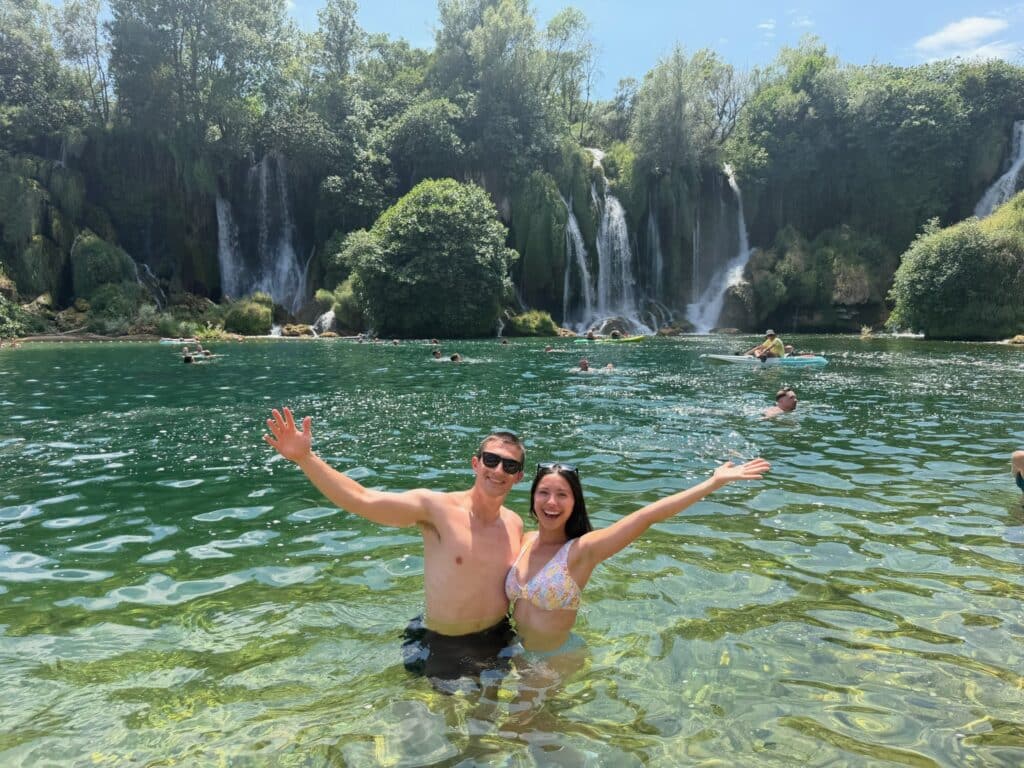
Our first major stop was Kravica Falls, and this ended up being our favorite part of the entire day. Honestly, the falls didn’t even feel real.
The bright blue-green water surrounded by the massive waterfalls and lush greenery was absolutely insane. We had seen pictures beforehand, but it was one of those places that looks even better when you’re actually standing there.
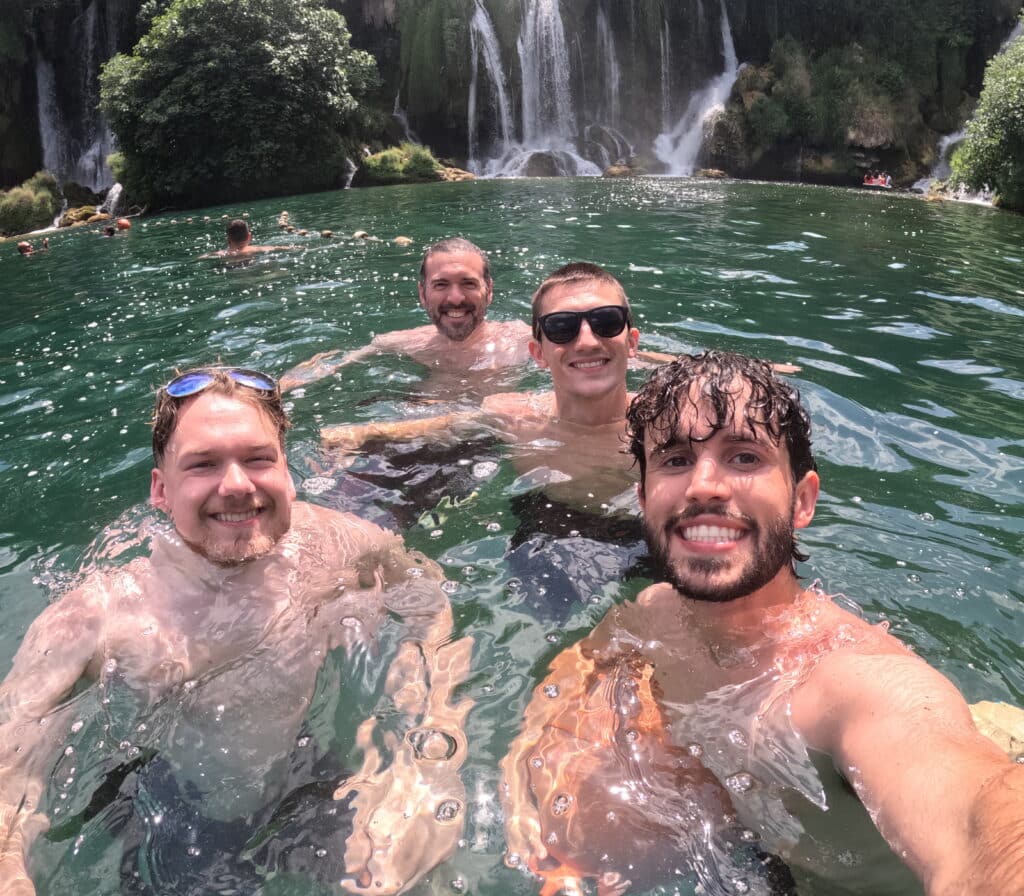
We swam in the Kravica Waterfalls, which was awesome, and we really enjoyed it. The only problem? The water was freezing. It was July, and temperatures were around 90°F outside, so jumping into the water seemed like a great idea at first; then we were quite shocked!
Even though the water was cold, we were really glad we went for it. If you’re visiting Kravica Falls during the summer, I’d definitely recommend bringing a swimsuit, water shoes for the rocks, and taking the plunge. You’ll probably regret it for about 30 seconds, but it’s worth it.
We also brought our GoPro, which was perfect for the falls. We were able to get some really cool photos and videos while swimming, and having the GoPro made the experience even more fun.
If you’re planning a Bosnia day trip from Dubrovnik, Kravica Falls alone makes the trip worth considering.
Visiting Mostar
After Kravica Falls, we made the short drive to Mostar, one of the most unique cities we visited during our time in Europe.
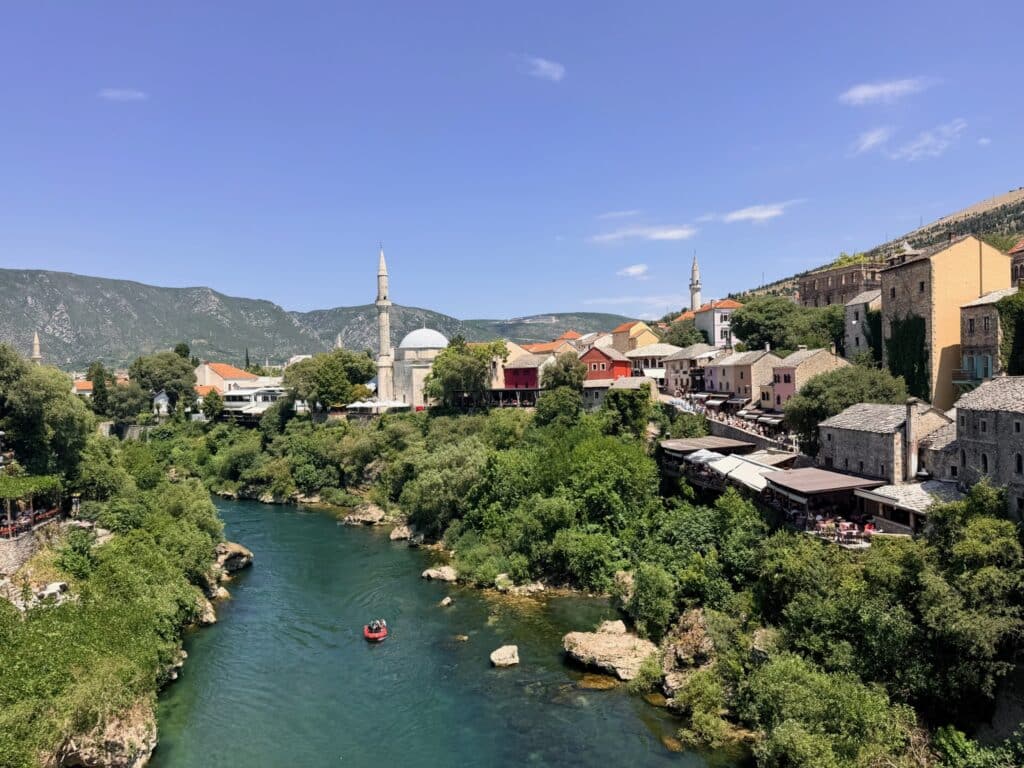
Mostar immediately felt different from other European cities we’d been to. The city’s Ottoman influence was especially noticeable, and we loved seeing the mosques throughout the city. The architecture, narrow streets, markets, and surrounding mountains gave Mostar a completely different feel from Dubrovnik and the other places we’d visited in nearby Croatia and Montenegro.
At the same time, there are parts of Mostar that feel much more weathered and war-scarred than the polished historic centers you’ll find in many European tourist destinations.
As we walked around, we noticed buildings that still showed signs of damage from the war. Some buildings have obviously been repaired or rebuilt, while others still show the scars of what happened here.
It’s a strange feeling because you’re walking through a beautiful, historic city while also being reminded that a devastating conflict happened here within living memory for many people.
Exploring the Old Town
The main street through Mostar was one of our favorite areas to explore. It was packed with souvenir shops, restaurants, and people making their way toward the city’s most famous landmark.
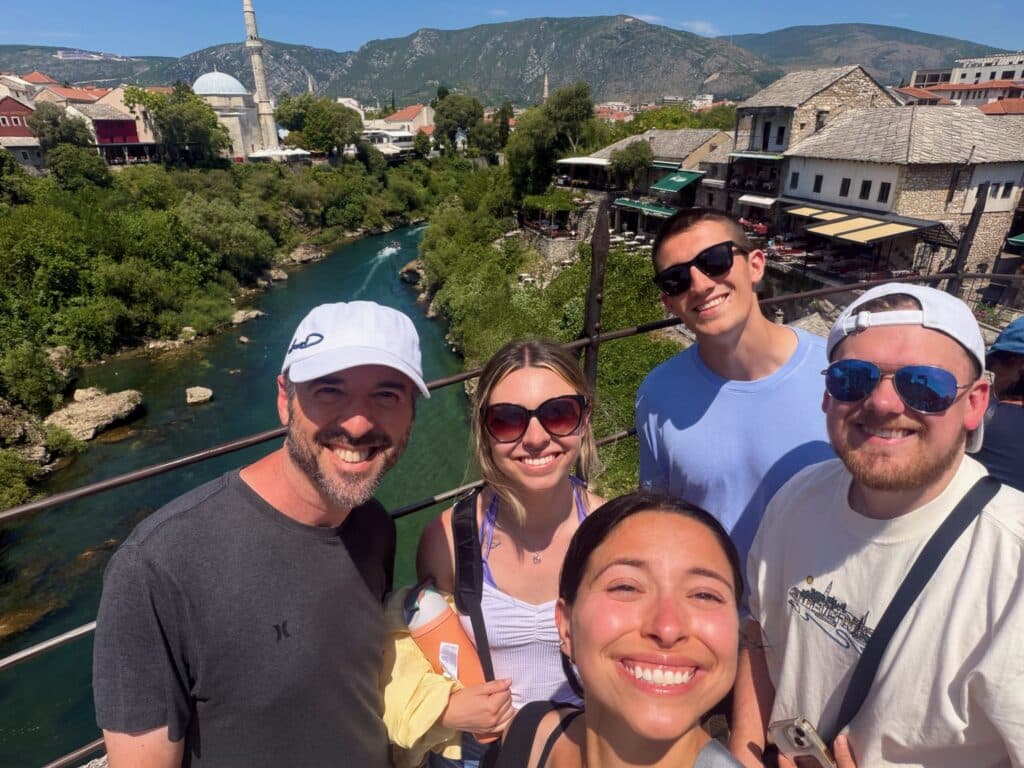
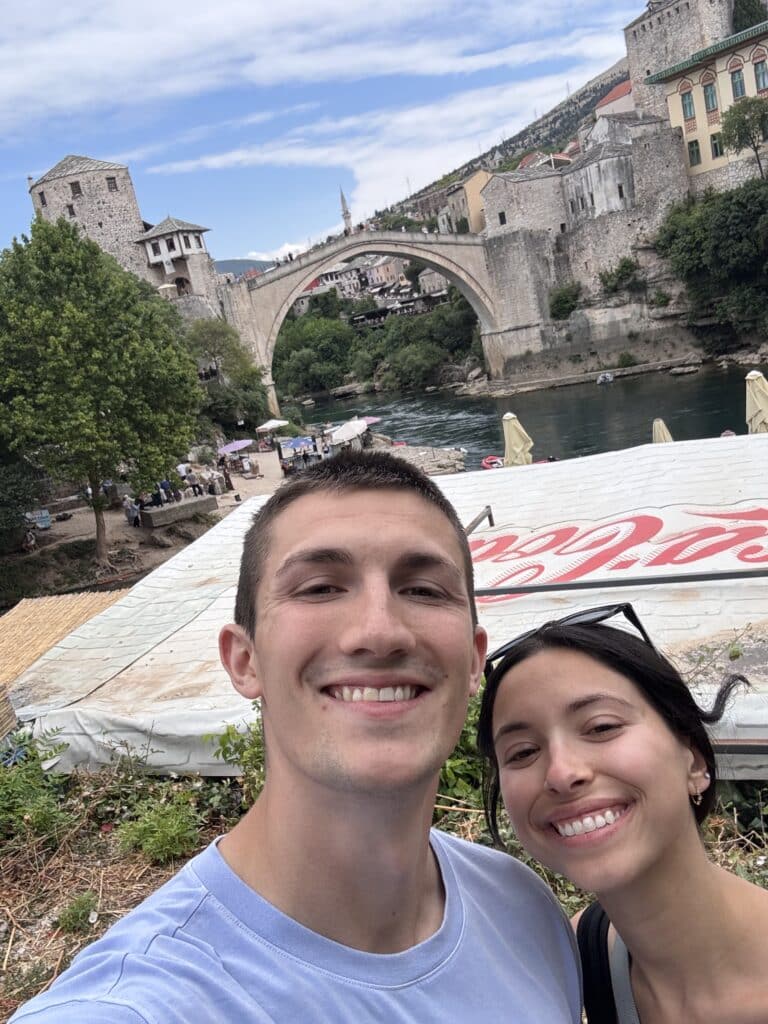
We took a walking tour of Mostar, which was a great way to learn more about the city and its history as we explored it. And, of course, the highlight was Stari Most — the Old Bridge.
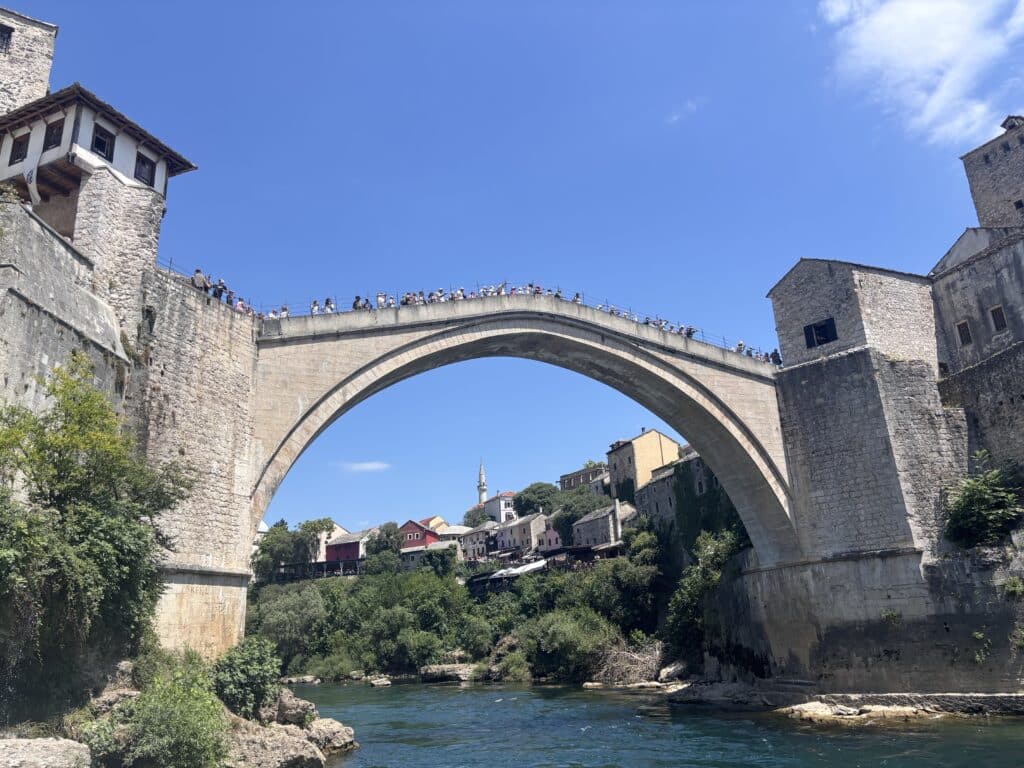
This was the sight we were most excited to see in Mostar, and it did not disappoint. The original bridge was built in the 16th century and became one of the defining landmarks of the city. It was destroyed during the Bosnian War in 1993 and later reconstructed using the traditional techniques and materials. The rebuilt bridge was completed in 2004 and is now one of the most recognizable symbols of Mostar.
Standing on the bridge and looking down at the Neretva River was definitely one of those “we’re actually here” travel moments. The bridge is also famous for its traditional diving tradition, although we definitely weren’t brave enough to jump off it ourselves.
One complaint we do have about exploring Old Town is that it gets very crowded during the day! When we were there at first, it was really nice and quiet, but towards the end of our visit it was crazy! The tour buses kept coming in, and the narrow streets became very crowded. Otherwise, the Old Town was historic, and our group had a great time!
Eating Traditional Bosnian Food in Mostar
One thing we always try to do when visiting a new country is eat some of the local food, so we stopped at Food House Mostar for lunch.
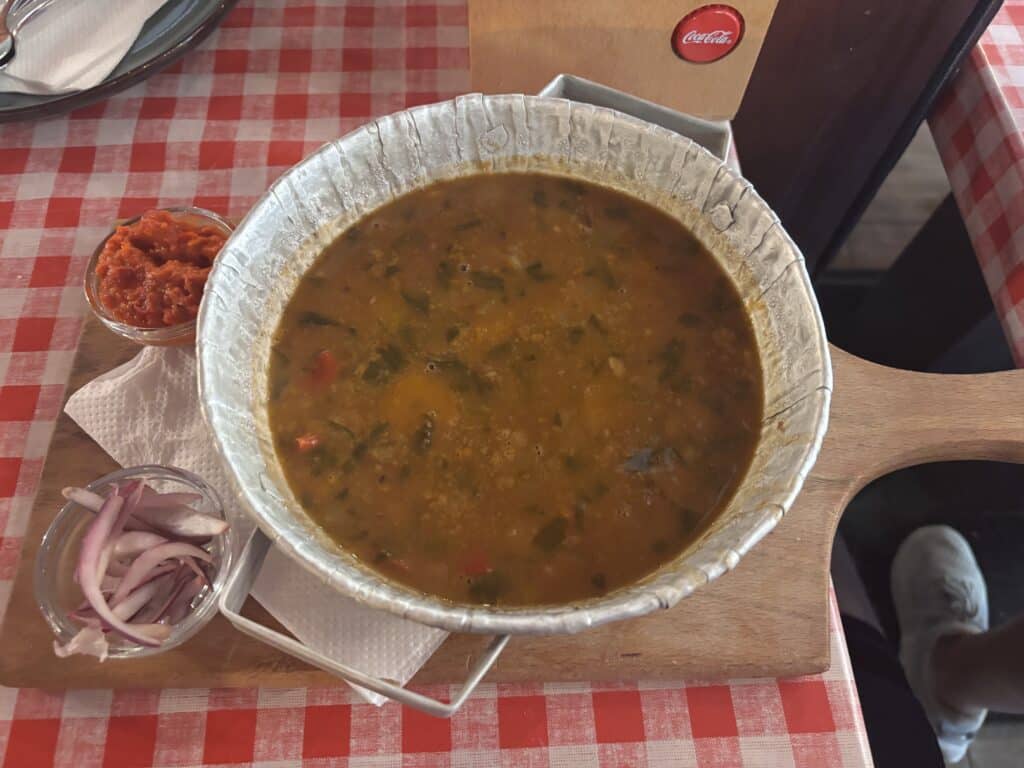
They serve traditional Bosnian dishes, and we really enjoyed our meal. Even better for us, there were several gluten-free options available. Dylan had a traditional Bosnian stew, and our family also tried japrak, a traditional dish here in Bosnia.
Another famous Bosnian food we saw everywhere was ćevapi, which is essentially grilled minced meat served in small portions, often with bread and other accompaniments. We didn’t actually try ćevapi in Bosnia, though.
We were cevapi-ed out from Montenegro earlier in the week, so we’ll have to save that one for our next trip to Bosnia!
Is a Bosnia Day Trip from Dubrovnik Worth It?
Overall, we had a great time on our day trip to Bosnia and Herzegovina.
Between the incredible scenery at Kravica Falls, the unique atmosphere of Mostar, the history of the region, and finally seeing the famous Old Bridge in person, it was a really memorable experience.
It also made us want to see more of Bosnia and Herzegovina. We only scratched the surface during our one-day visit, and there are clearly plenty of other places throughout the country that we’d like to explore someday.
If you’re spending several days in Dubrovnik and want to see something completely different, we definitely recommend taking a day trip to Bosnia and Herzegovina.
Whether you join a tour like we did or rent a car and explore on your own, it’s an easy way to experience another country and one of the most unique destinations near Dubrovnik.
More to explore

The Best of: 3 Days in Dubrovnik, Croatia
Planning 3 days in Dubrovnik, Croatia? Explore the best things to do, where to stay, day trips, and travel tips for the perfect Dubrovnik itinerary.
The Ultimate 3 Days in Montenegro Itinerary for First Timers
Planning a trip to Montenegro? Discover the ultimate 3-day Montenegro itinerary for first-timers, including Budva, Kotor, the Blue Cave, Our Lady of the Rocks, and more.
How to Spend 3 Days in Seville, Spain: Complete Itinerary
Discover how to spend 3 days in Seville, Spain with our complete itinerary, including the best attractions, flamenco experiences, travel tips, and more.

