
Dylan and Maddy
48 Hours in Madrid: The Best 2-Day Itinerary
We just returned from an incredible trip to Madrid, and we couldn’t wait to share our honest take on Spain’s vibrant capital city. As travel bloggers who value real, relatable experiences, we know how overwhelming it can be to plan a first-time visit to a city packed with world-famous landmarks, royal history, and endless things to do. That’s why we’re excited to share our perspective—straight from the bustling plazas, beautiful parks, and historic streets we explored.
Spoiler: Madrid exceeded our expectations! From stunning architecture and impressive royal landmarks to hidden viewpoints and delicious churros, we found so much to love during our visit. This itinerary is packed with practical tips, what we think is truly worth your time, and a few honest opinions to help you experience the best of Madrid in just two days.
Whether you’re interested in history, architecture, food, soccer, or simply soaking in the atmosphere of one of Europe’s great capitals, we hope this itinerary helps you make the most of your time in Madrid!
Table of Contents
How to Get to Madrid
Getting to Madrid is incredibly easy thanks to its excellent air and rail connections. We arrived by high-speed train from Barcelona, which took about three hours. The seats were spacious, the ride was smooth, and it made traveling between Spain’s two largest cities completely stress-free.
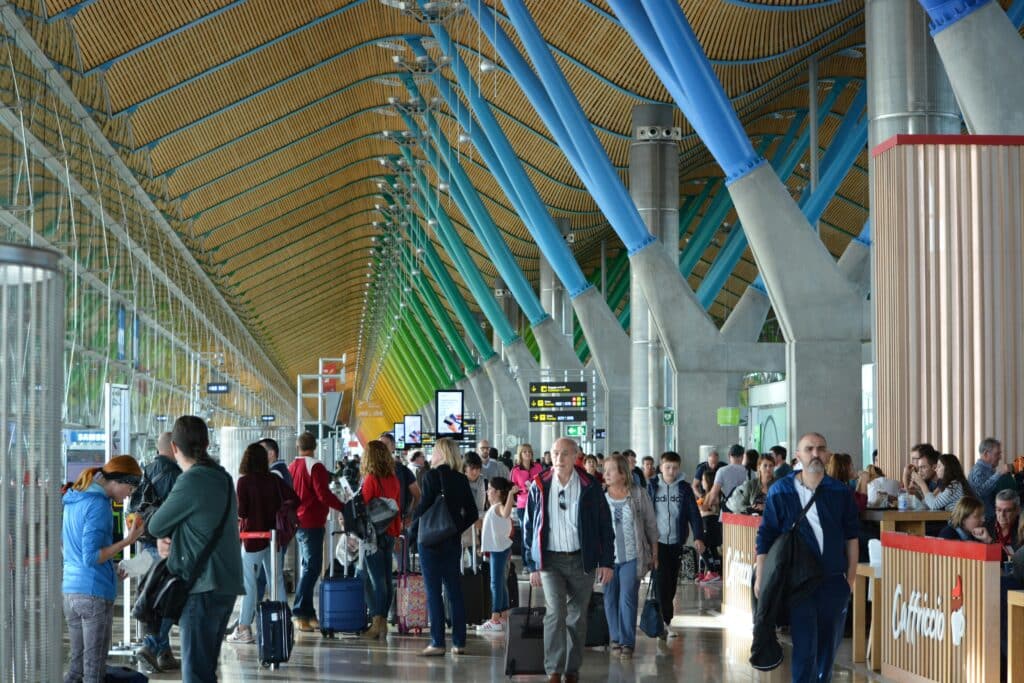
If you’re visiting from elsewhere, Madrid is also served by Adolfo Suárez Madrid-Barajas Airport (MAD), one of Europe’s busiest airports, with direct flights from major cities across Europe and North America.
Whether you’re arriving by plane or train, you’ll have no trouble reaching the city center. Madrid’s transportation system is efficient, well-connected, and easy to navigate, making it a great destination to include in a larger Spain or Europe itinerary.
Where to Stay in Madrid
We highly recommend staying in Madrid’s city center, especially if it’s your first visit. Areas near Plaza Mayor, Puerta del Sol, Gran Vía, or the Royal Palace put you within walking distance of many of the city’s top attractions.
We personally stayed in an Airbnb just a few minutes’ walk from Plaza Mayor, and it ended up being the perfect home base. Not only was it surprisingly affordable, but being able to walk to most of the places on this itinerary saved us a ton of time and made exploring the city incredibly easy.
One of our favorite things about Madrid was how walkable it felt. By staying centrally, you’ll spend less time commuting and more time exploring historic streets, beautiful plazas, restaurants, and attractions.
Madrid offers accommodations for every budget, from luxury hotels and boutique properties to affordable hostels and apartments. No matter where you stay, choosing a central location will make your 48 hours in Madrid much more enjoyable.
Day 1: Madrid's Historic Center & Sunset Views
Plaza Mayor
Start your first day in Madrid at Plaza Mayor, one of the city’s most famous landmarks.
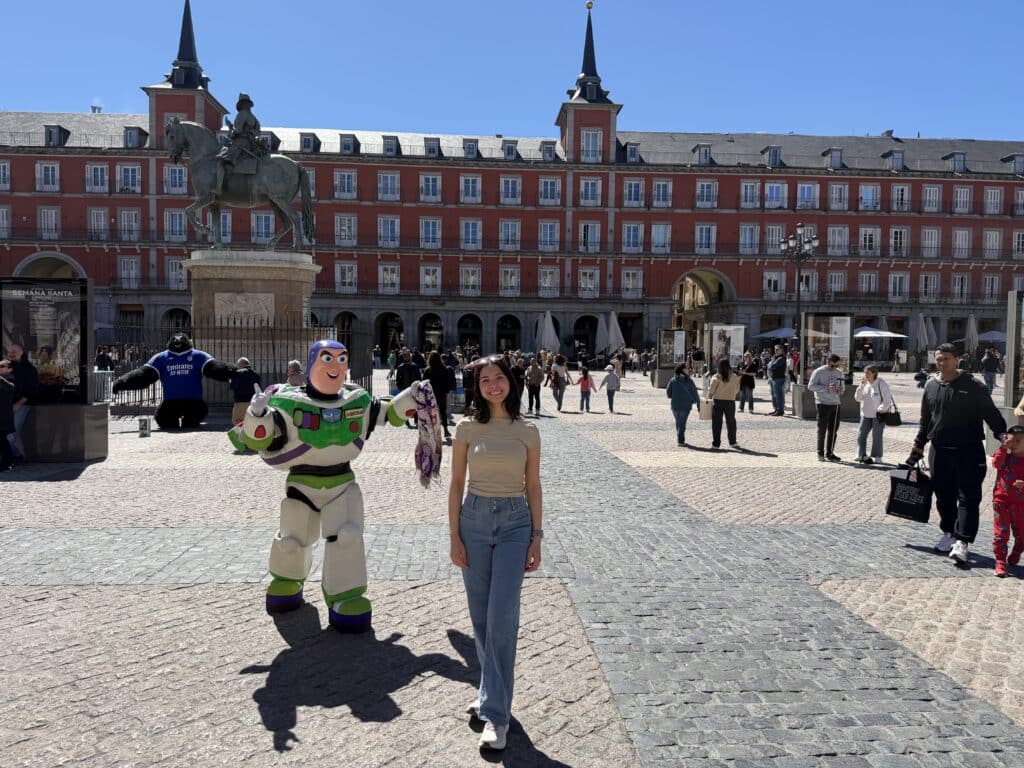
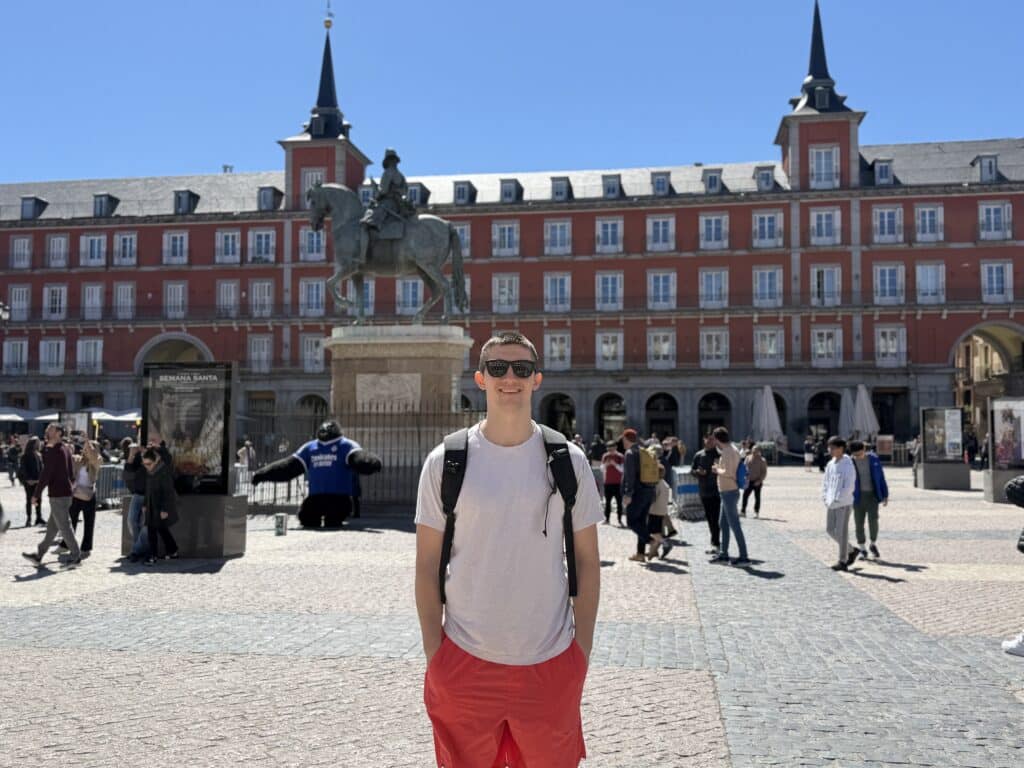
This historic square immediately became one of our favorite places in Madrid. Surrounded by beautiful red buildings, archways, and outdoor cafés, it’s easy to see why this has been the heart of the city for centuries.
That said, it can definitely get busy. During our visit, there were people dressed as everything from Buzz Lightyear to King Kong approaching tourists for money, which made for an interesting experience! Despite the crowds, the architecture alone makes Plaza Mayor well worth visiting.
We recommend spending about 30 minutes here before continuing your day.
Gran Vía
From Plaza Mayor, make your way to Gran Vía, Madrid’s most famous avenue.
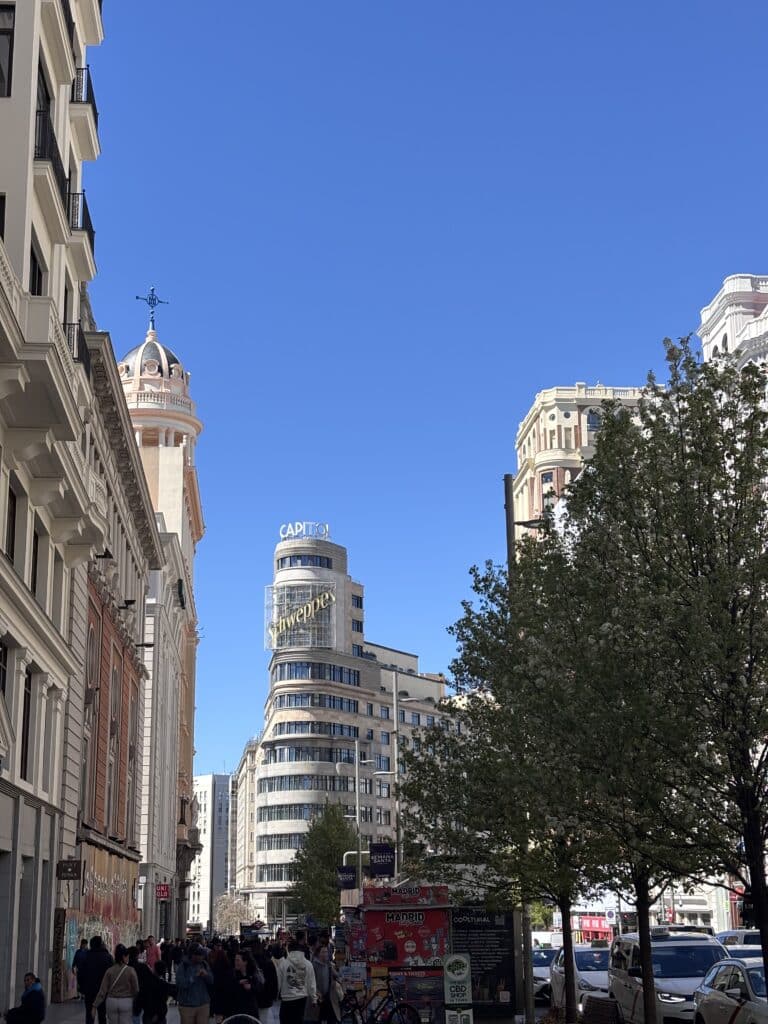
Often referred to as the “Broadway of Madrid,” this bustling street is lined with theaters, shops, restaurants, and impressive architecture. One of the highlights is the iconic Schweppes Building, which has become one of Madrid’s most recognizable landmarks.
While Gran Vía wasn’t necessarily our favorite area of the city, visitors who enjoy shopping, nightlife, and big-city energy will probably love it. It’s definitely worth seeing at least once during your visit.
Puerta del Sol
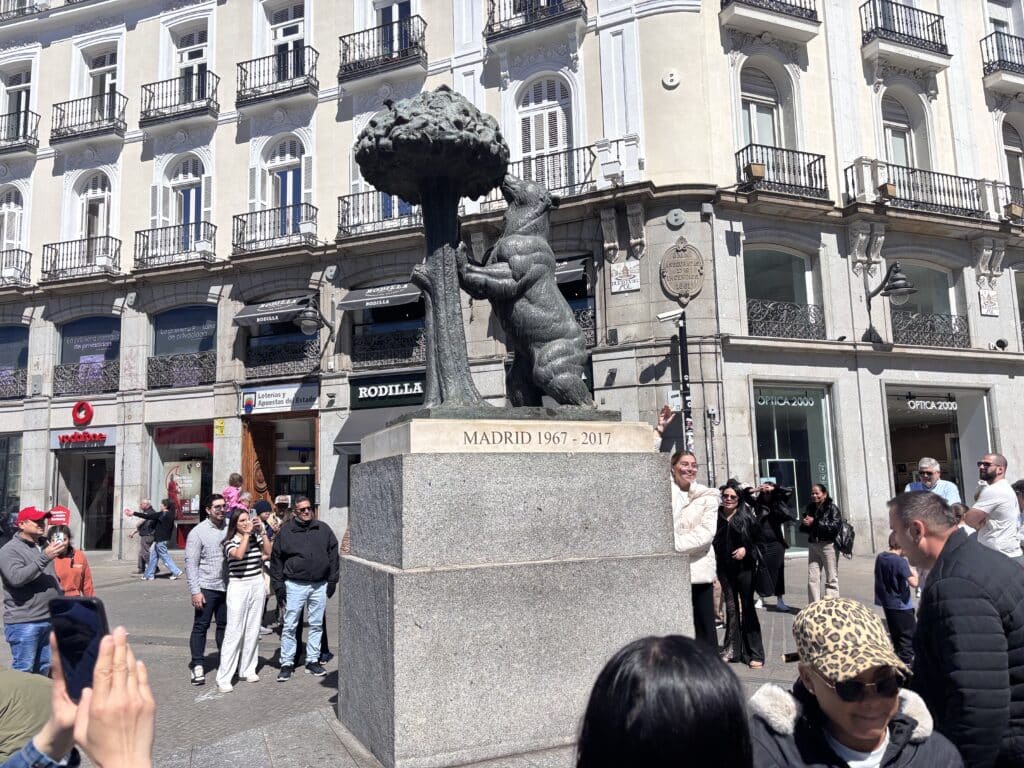
Just a short walk away is Puerta del Sol, one of Madrid’s busiest and most important squares. While you’re here, be sure to stop by the famous Bear and the Strawberry Tree statue (El Oso y el Madroño), one of the most recognizable symbols of Madrid. The statue appears on Madrid’s coat of arms and has become an iconic representation of the city. You’ll almost always find people gathered around it taking photos, and it serves as one of the most popular meeting points in Madrid.
Sabatini Gardens
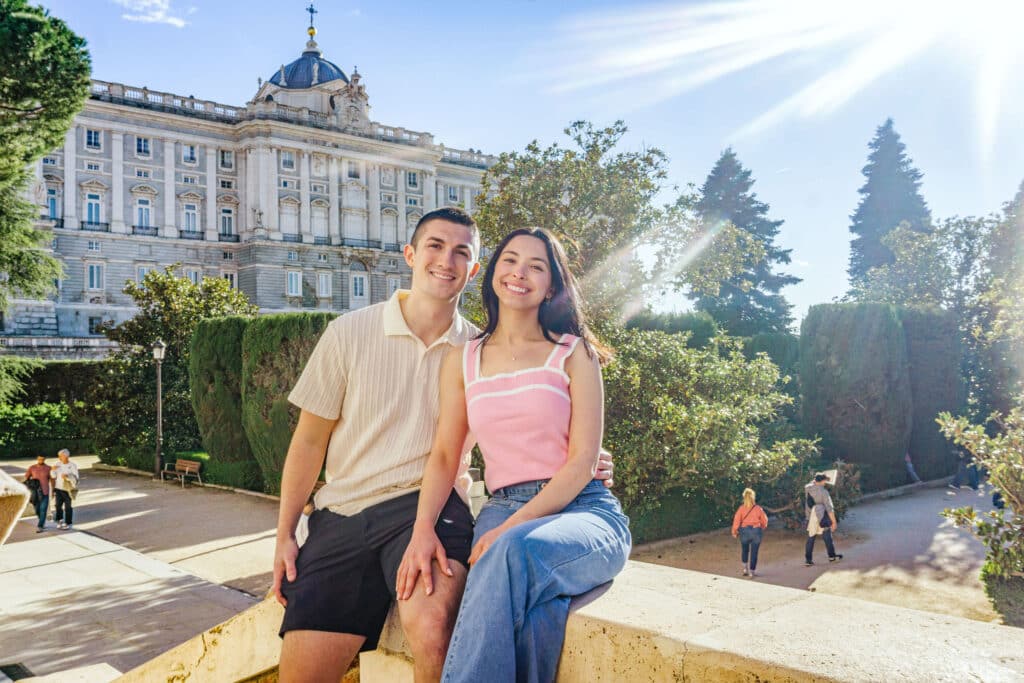
Next, head toward the Royal Palace and spend some time exploring the beautiful Sabatini Gardens.
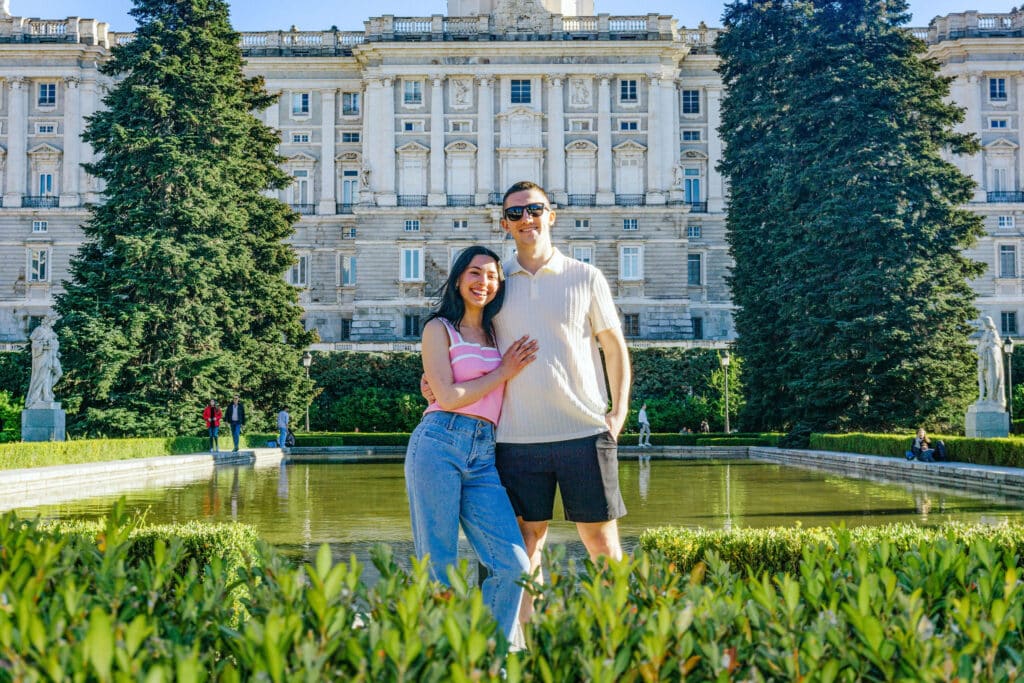
These perfectly manicured gardens offer fantastic views of the palace and provide a peaceful escape from the crowds. We found this to be one of the most relaxing spots in central Madrid.
Royal Palace (Exterior)
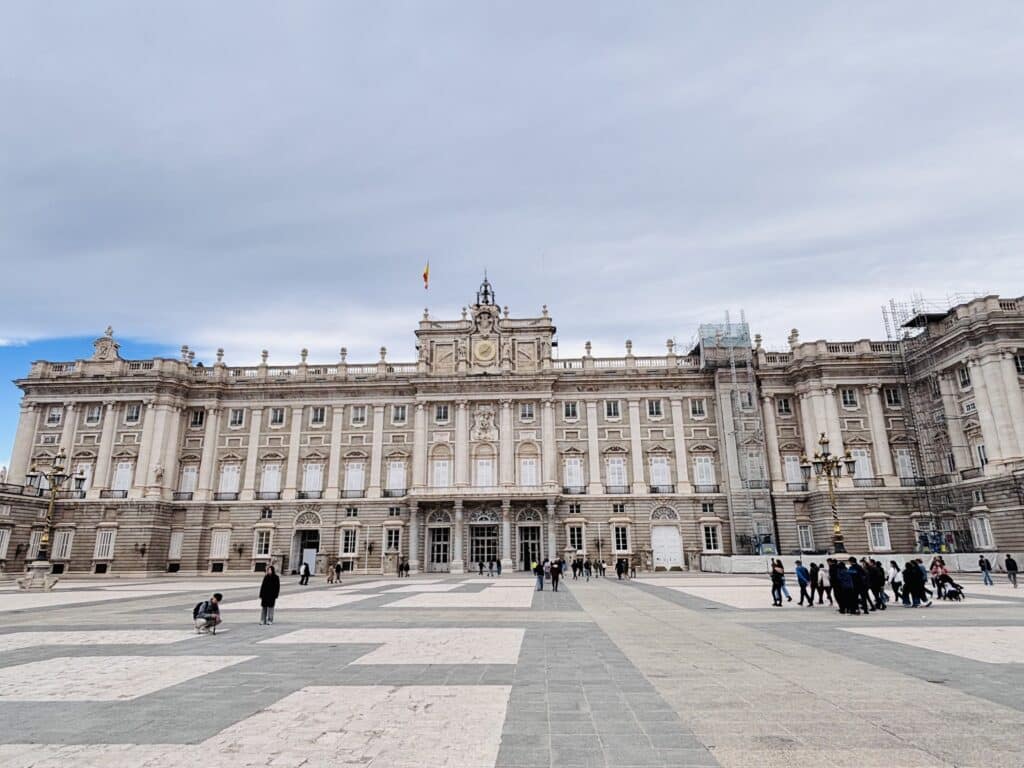
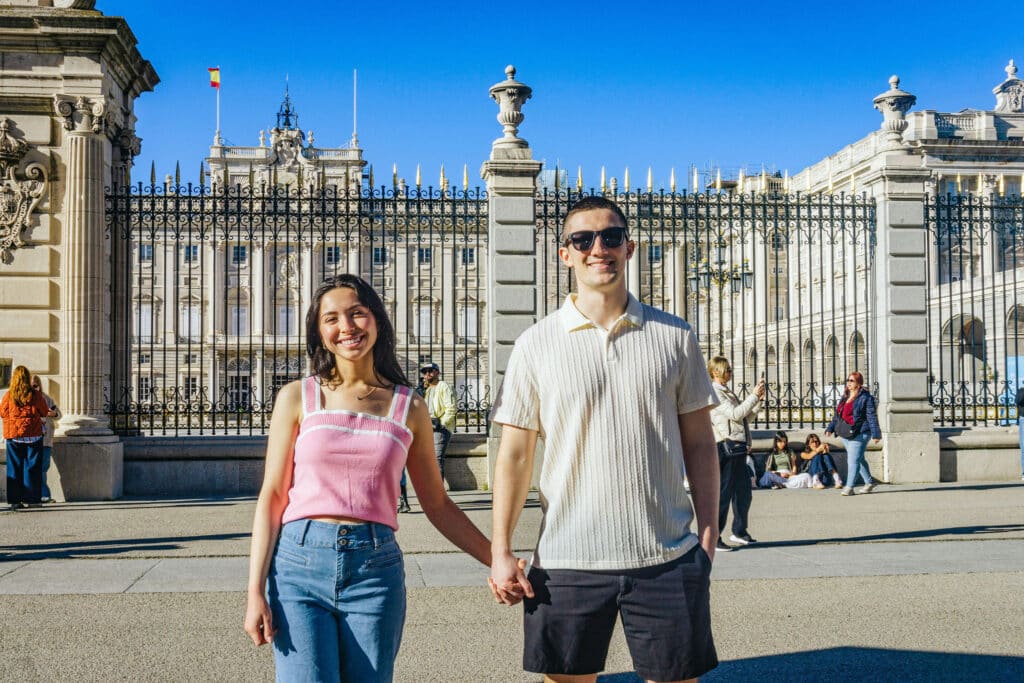
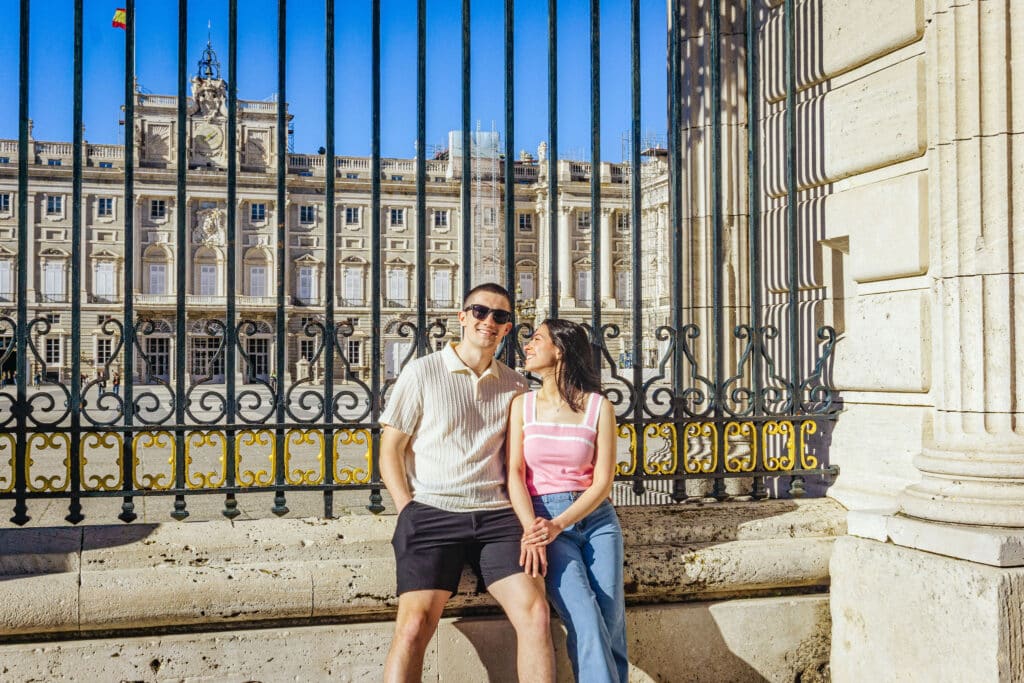
Before touring the palace tomorrow, take some time to admire it from the outside.
The Royal Palace is absolutely massive, and even seeing it from the exterior is impressive. We recommend saving the full tour for Day 2, but today is a great opportunity to walk around the grounds and take some photos. Usually on day one, we can’t help ourselves to not see the most iconic spots.
Temple of Debod
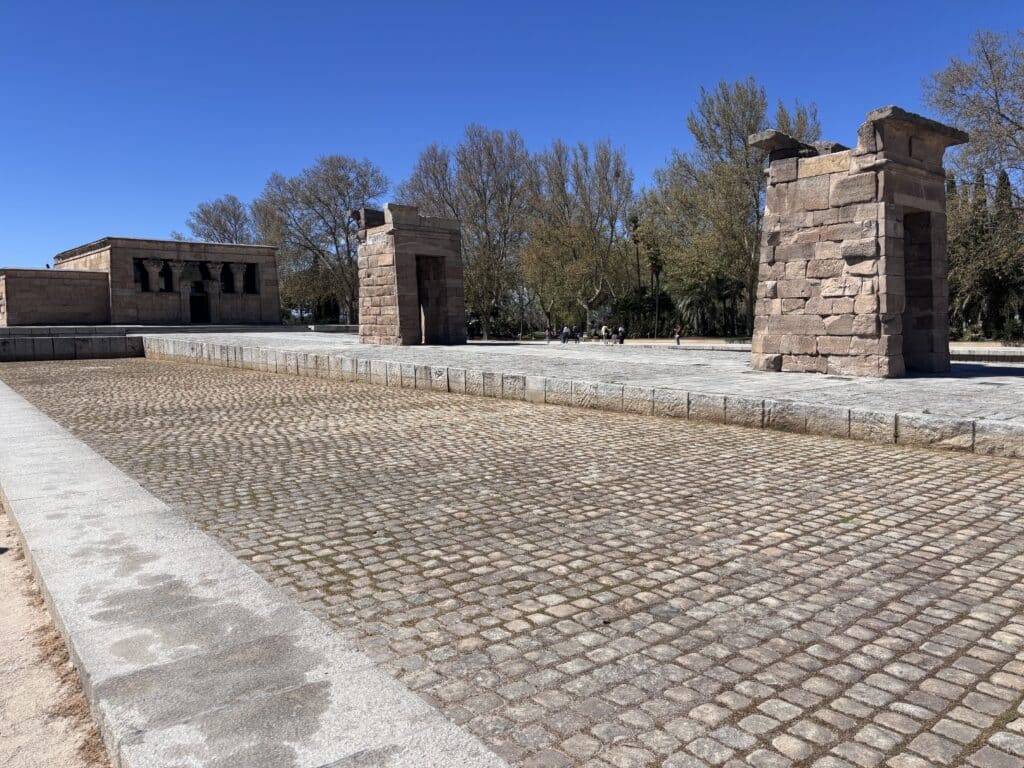
One of the most unique attractions in Madrid is the Temple of Debod.
Originally built in Egypt and gifted to Spain, this ancient temple feels completely out of place—in the best possible way. Seeing authentic Egyptian architecture in the middle of Madrid was something we never expected and ended up being one of the unique sights of our trip.
Príncipe Pío Viewpoint
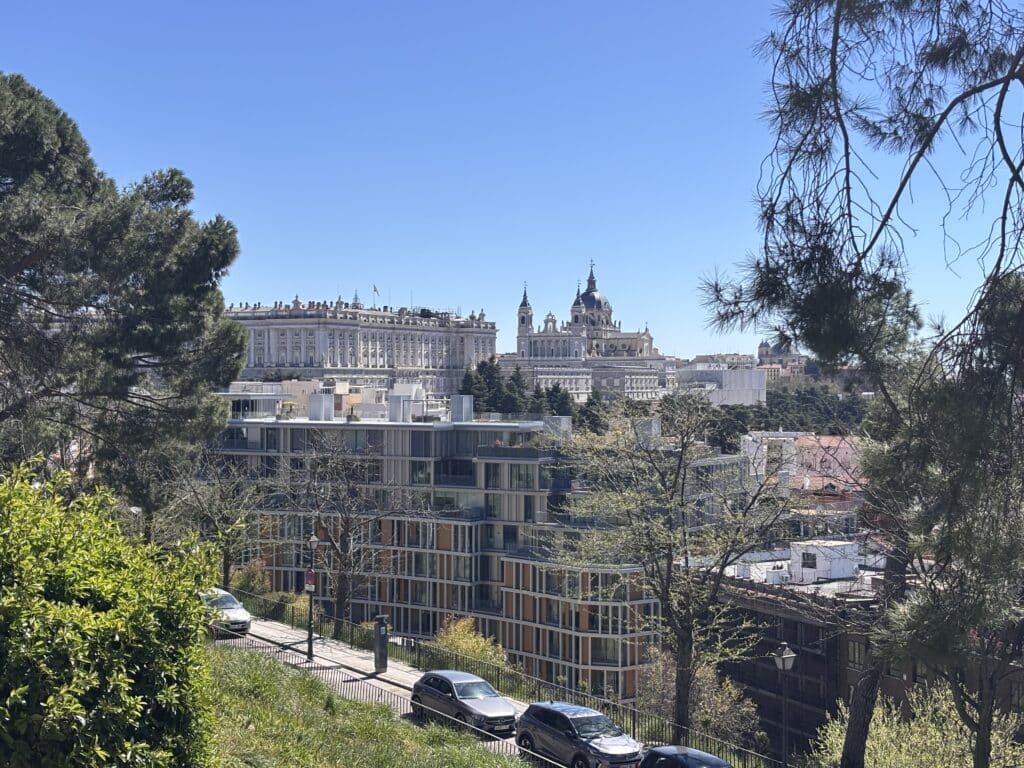
While visiting the Temple of Debod, make sure to walk over to the nearby Príncipe Pío viewpoint.
The views from here are fantastic and provide a unique perspective of Madrid’s skyline. It’s a great place to take photos and appreciate the beauty of the city.
Evening Photos Around Plaza Mayor & The Royal Palace
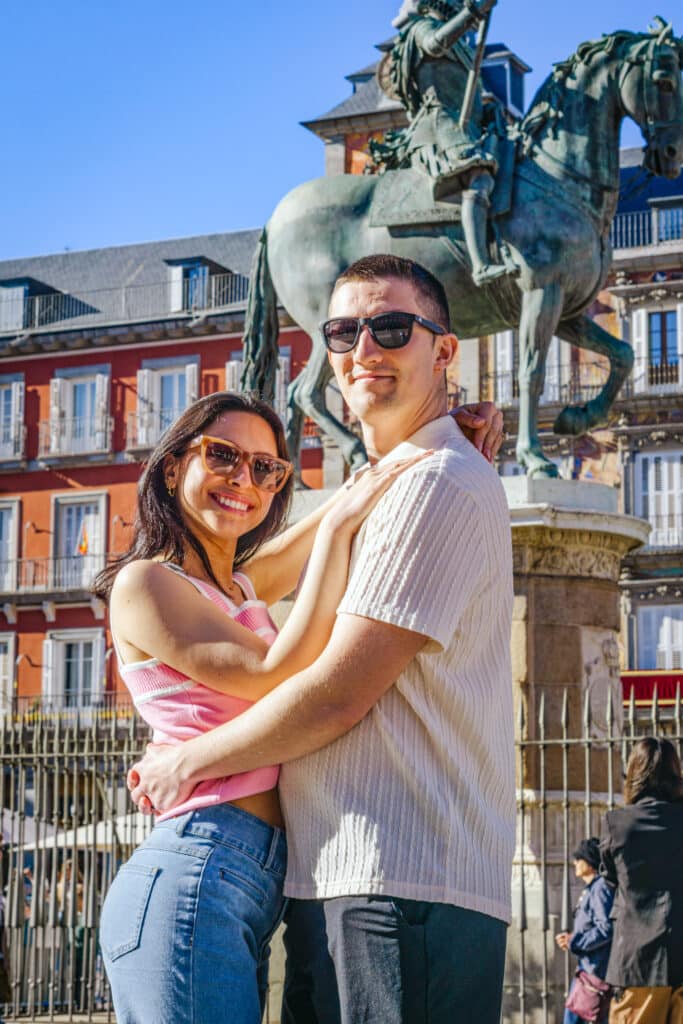
One thing we highly recommend is returning to Plaza Mayor and the Royal Palace area later in the evening.
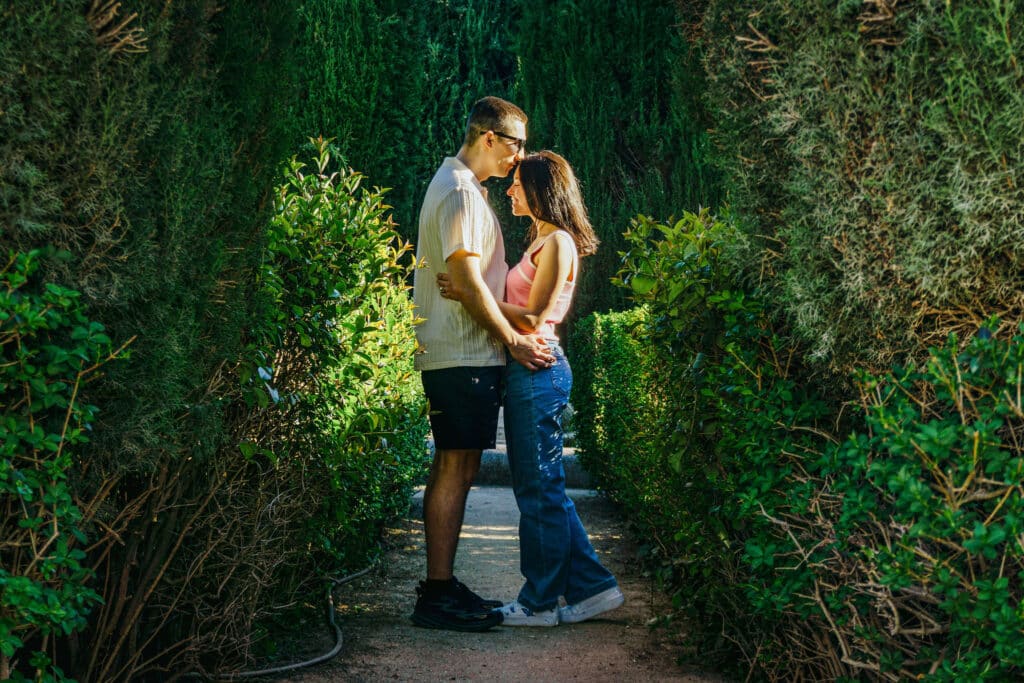
The crowds are much smaller, the lighting is beautiful, and the atmosphere feels completely different. We actually did a photoshoot during this time and ended up getting some of our favorite pictures from the entire trip.
If you’re interested in photography, this is the best time of day to visit these landmarks.
End Your Day at Chocolatería 1902
After a busy day of sightseeing, treat yourself to one of Madrid’s most famous desserts.
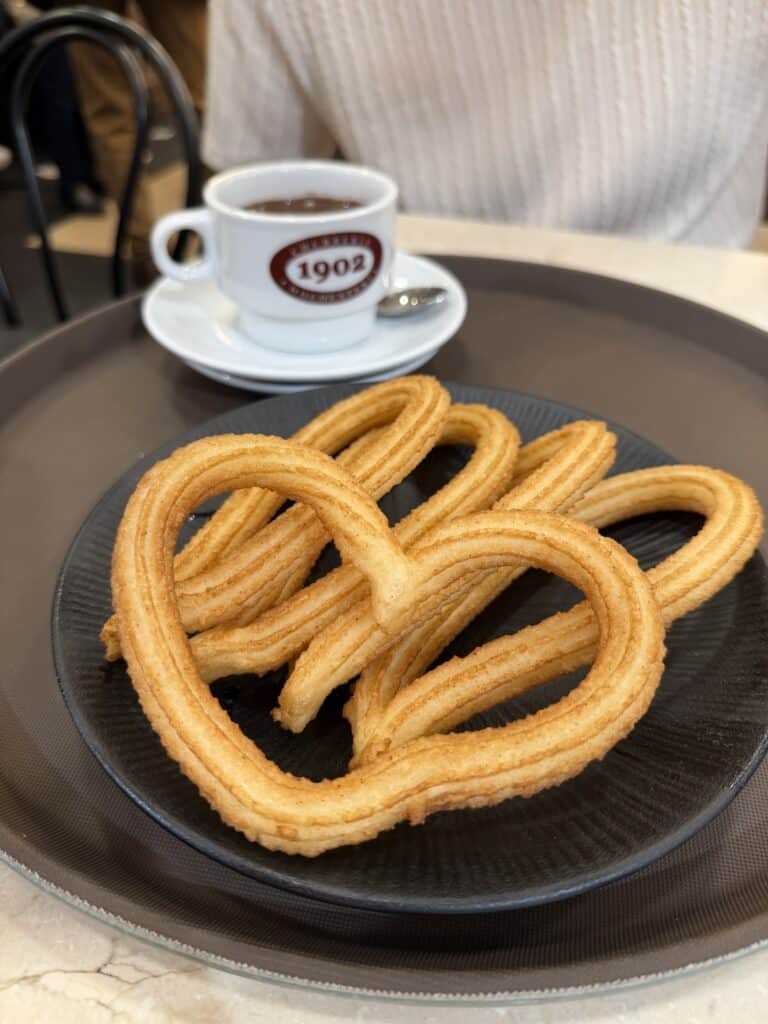
We ended our evening at Chocolatería 1902, and the churros absolutely lived up to the hype. They’re served alongside rich melted chocolate that’s perfect for dipping.
As an added bonus/need for us, they also offer gluten-free churros, which can be difficult to find while traveling. Whether you’re gluten-free or not, this is a stop we highly recommend.
Day 2: Royal History, Retiro Park & Real Madrid
Tour the Royal Palace
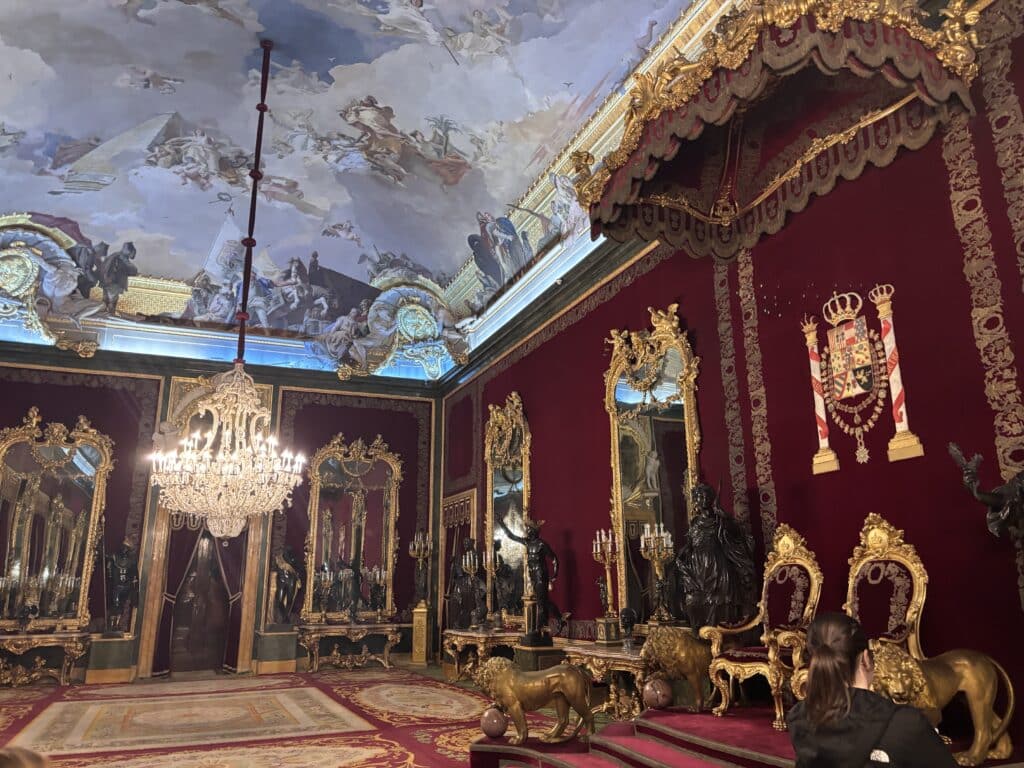
Start your second day early at the Royal Palace. Not only is this one of Madrid’s top attractions, but it’s also the largest royal palace in Europe. The interior is stunning, with grand staircases, lavish rooms, beautiful artwork, and incredible attention to detail throughout.
We highly recommend booking a guided tour. Learning the history behind the rooms and royal family added so much to the experience and helped us appreciate the palace even more. Plan to spend about three hours here.
Almudena Cathedral
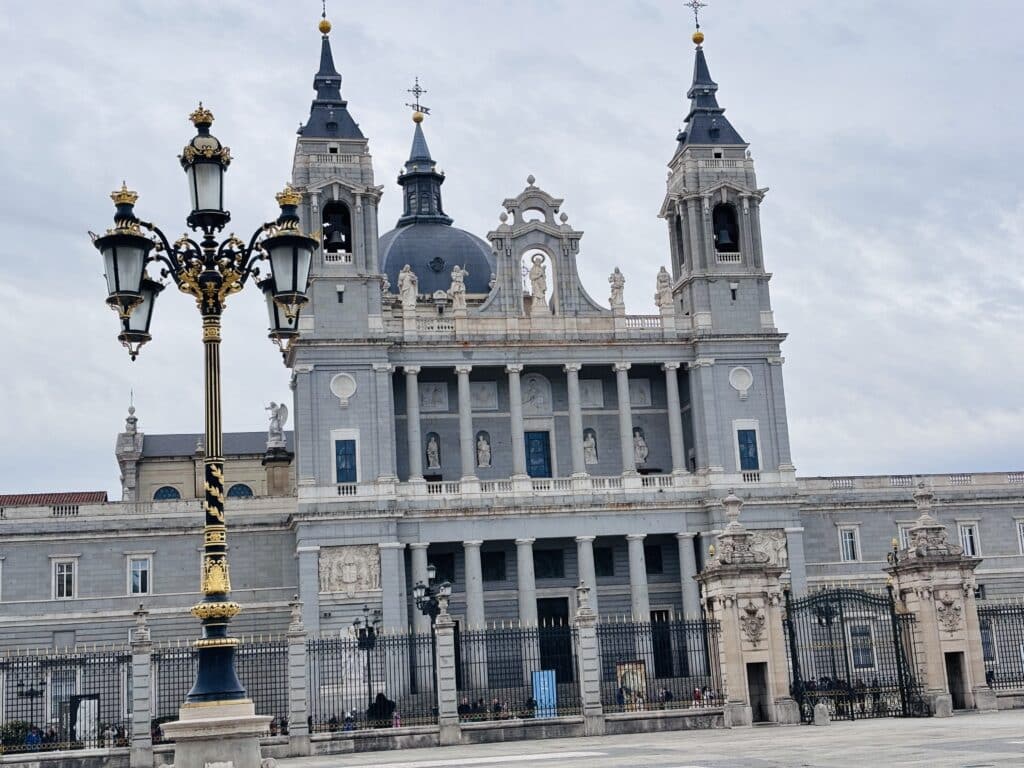
Directly across from the Royal Palace sits Almudena Cathedral. We only stopped to admire it from the outside, but it’s an impressive building and worth seeing while you’re already in the area. If you have additional time, you may want to explore the interior as well.
Alcalá Gate
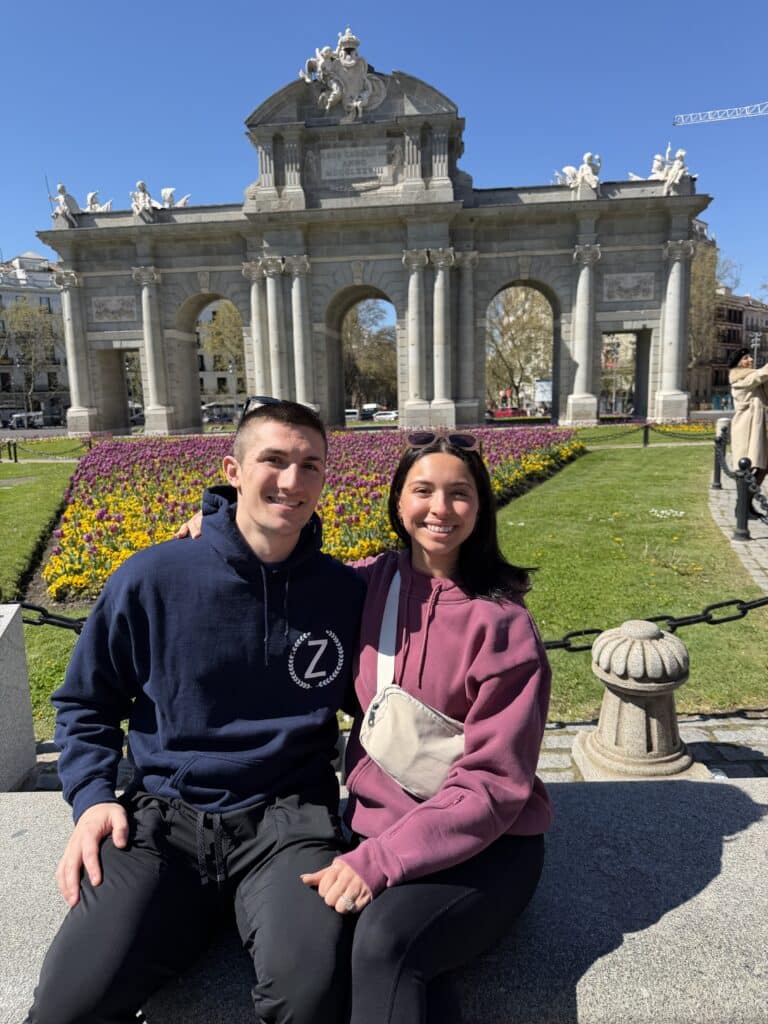
On your way to Retiro Park, make a quick stop at the iconic Alcalá Gate (Puerta de Alcalá), one of Madrid’s most famous landmarks.
Built in the 18th century, this impressive monument was once one of the main entrances to the city and remains one of Madrid’s most recognizable sights today. While the gate itself is beautiful, what really stood out to us were the gardens surrounding it.
During our visit, the flower beds were filled with vibrant purple tulips and bright yellow flowers, creating a stunning contrast against the historic stone monument. It was one of the most picturesque scenes we encountered in Madrid and definitely worth stopping for a few photos before continuing on to Retiro Park.
Even though it doesn’t require much time to visit, we think it’s one of those landmarks that helps showcase Madrid’s elegance and charm.
Retiro Park
After spending the morning indoors, head over to Retiro Park, one of the most beautiful urban parks we’ve visited in Europe.
What surprised us most was how peaceful it felt. Once inside, it hardly feels like you’re in the middle of a major capital city. You’ll find locals walking, biking, relaxing, and enjoying the green space throughout the park.
One of the highlights is the large boating lake, where visitors can rent rowboats and enjoy one of the most romantic settings in Madrid.
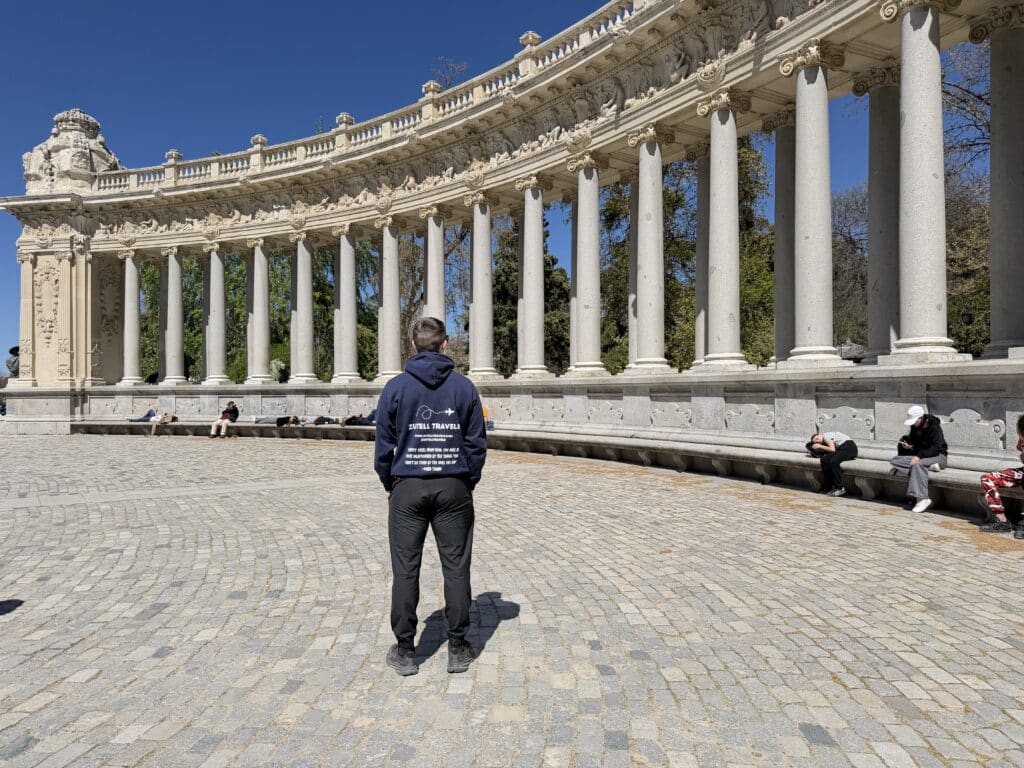
Another pleasant surprise was the Monument to King Alfonso XII. The structure is absolutely massive and almost feels Roman in design. Sitting beside the lake, it creates one of the most impressive scenes in the entire park.
You’ll also find the Crystal Palace here. Unfortunately, it was closed for restoration during our visit, but based on the photos we’ve seen, it looks absolutely stunning.
Prado Museum
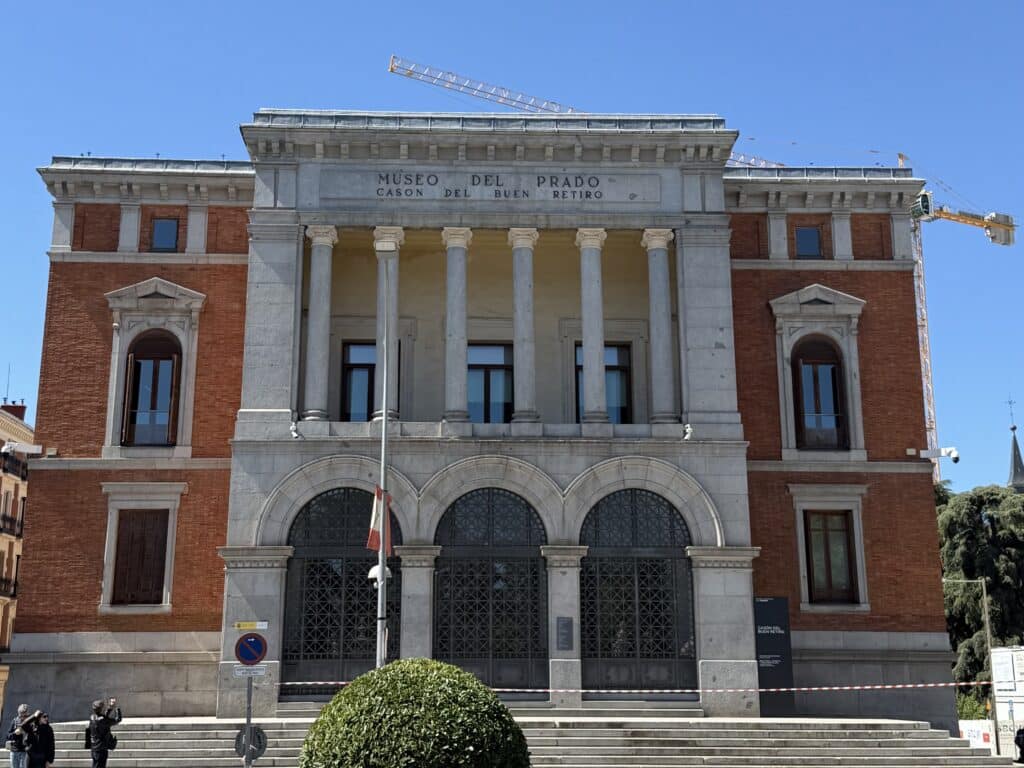
If you’re an art lover, your next stop should be the Prado Museum. Although we didn’t tour the museum ourselves, it’s considered one of the most important art museums in the world and is home to works by some of Spain’s most famous artists. Even seeing the impressive exterior was worthwhile while exploring this area of Madrid.
Cibeles Fountain & Palace
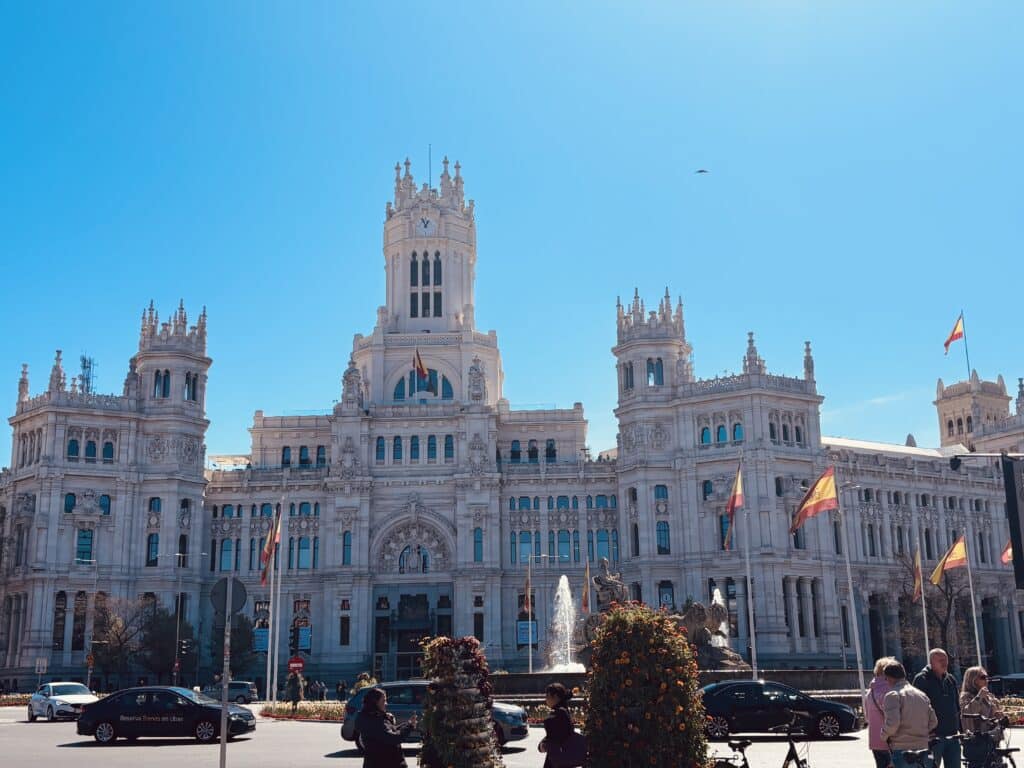
Next, make your way to one of Madrid’s most stunning landmarks: Cibeles Fountain and Cibeles Palace.
This quickly became one of our favorite buildings in the city. The architecture is incredible, and the entire area feels grand and elegant.
If possible, we’d recommend seeing it both during the day and after dark. Unfortunately, our schedule didn’t allow us to return at night, but from the photos we’ve seen, it’s absolutely beautiful when illuminated.
Santiago Bernabéu Stadium Tour
Finish your 48 hours in Madrid with one of our favorite experiences from the entire trip: the Santiago Bernabéu Stadium Tour.
As the home of Real Madrid, one of the most successful and recognizable soccer clubs in the world, the Bernabéu is a must-visit attraction for sports fans. Even if you’re not a huge soccer fan, this tour is incredibly impressive.
Walking through the stadium, learning about the history of Real Madrid, and seeing the club’s massive trophy collection was such a unique experience. It’s hard not to appreciate the incredible history and success of the club while exploring the museum and stadium.
As sports fans, this was easily one of the highlights of our visit. Everything is incredibly well done, and the stadium itself is absolutely stunning. If you’re debating whether the tour is worth it, our answer is simple: absolutely.
10/10 recommend.
Best Day Trips from Madrid
While this itinerary focuses on spending 48 hours in Madrid itself, we actually spent a third day exploring two of Spain’s most famous nearby destinations: Segovia and Toledo.
Both cities are easy to visit from Madrid and make excellent additions to your itinerary if you have an extra day available.
Toledo
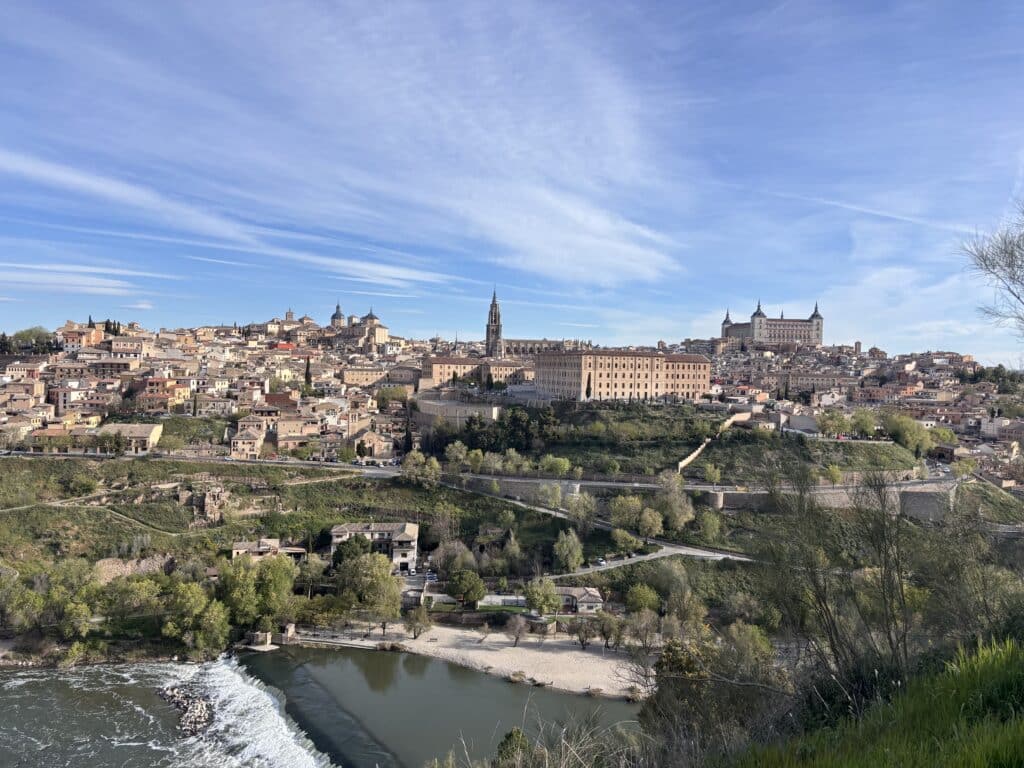
Known as the “City of Three Cultures,” Toledo is famous for its medieval streets, historic churches, and stunning hilltop views. Walking through the city feels like stepping back in time, but what stood out most to us was the landscape surrounding it.
Unlike many European cities, Toledo has a rugged, golden-colored appearance thanks to its stone buildings, rolling hills, and dramatic setting above the Tagus River. The combination of gray and yellow tones gave the city a unique look that felt completely different from anywhere else we visited in Spain. From the viewpoints overlooking the city, Toledo almost looks like something straight out of a medieval painting.
It’s easy to see why Toledo is considered one of Spain’s most beautiful and unique destinations.
Segovia
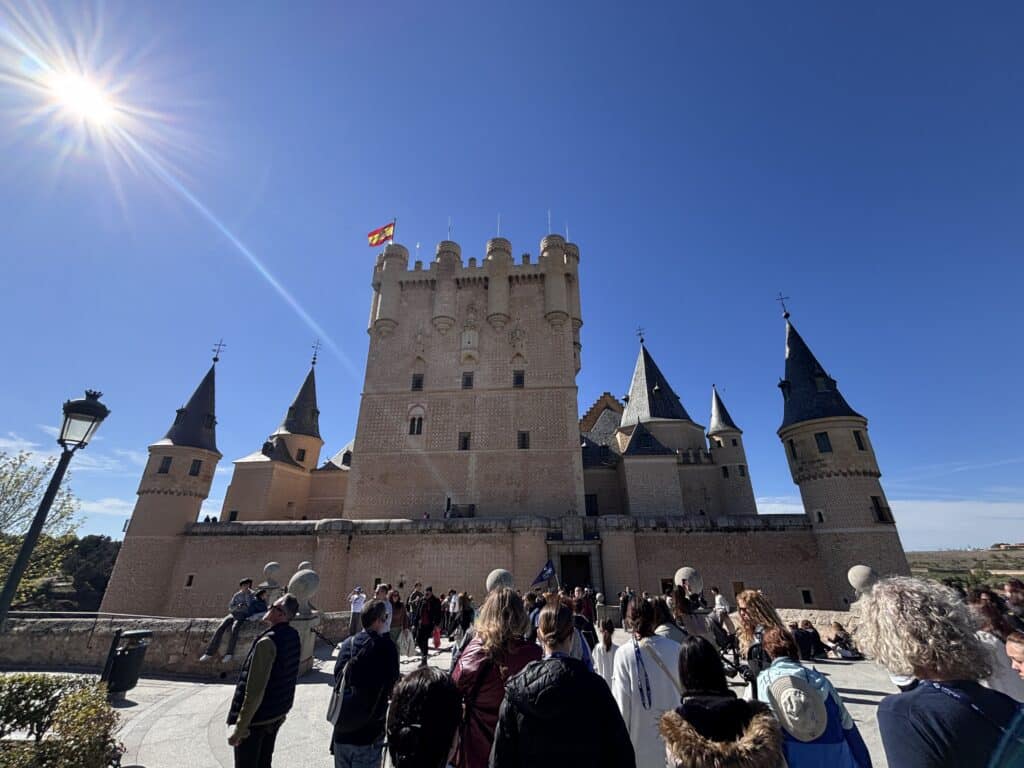
Segovia is best known for its remarkably preserved Roman Aqueduct, one of the most impressive ancient structures we’ve ever seen. The city is also home to a fairytale-like castle, Alcázar of Segovia, which is said to have inspired Cinderella’s Castle at Disney. This was our favorite part of our day trip to Toledo and Segovia.
Stay tuned as we will have an entire blog post dedicated to this day trip, to give you a full idea of what you can expect!
Ávila
Another popular day trip option from Madrid is Ávila, a historic city famous for its remarkably preserved medieval walls. Often considered one of the best-preserved walled cities in Europe, Ávila offers visitors the chance to walk along portions of the ancient fortifications while enjoying views of the surrounding countryside.
Although we didn’t have time to visit during our trip, it was one of the destinations that repeatedly came up while researching Madrid day trips. If you’re interested in medieval history, architecture, and smaller crowds than Toledo, Ávila could be a great addition to your itinerary.
Frequently Asked Questions About Visiting Madrid
Is 2 days enough time in Madrid?
Yes! While you could easily spend a week exploring Madrid, we found that 48 hours is enough time to see many of the city’s top attractions, including the Royal Palace, Retiro Park, Plaza Mayor, Gran Vía, and Santiago Bernabéu Stadium. Two days is perfect for first-time visitors looking to experience the highlights without feeling too rushed.
What is the best time of year to visit Madrid?
Spring (March-May) and fall (September-November) are generally considered the best times to visit Madrid. During these months, temperatures are pleasant and sightseeing is much more comfortable. We visited in the spring and found the weather ideal for walking around the city all day.
Is Madrid a walkable city?
Absolutely. One of our favorite things about Madrid was how walkable it felt. Most of the major attractions in the city center are within walking distance of each other, and we spent the majority of our trip exploring on foot. Just be sure to pack comfortable shoes!
Should I tour the Royal Palace in Madrid?
Yes, we highly recommend it. While the exterior is impressive on its own, the inside of the Royal Palace is what truly makes it special. As the largest royal palace in Europe, it’s packed with stunning rooms, artwork, and fascinating history. We recommend setting aside about three hours for the experience.
Is the Santiago Bernabéu Stadium Tour worth it even if I’m not a soccer fan?
Without a doubt. Even if you’re not a die-hard soccer fan, the Santiago Bernabéu Stadium Tour is one of the most unique experiences in Madrid. Learning about the history of Real Madrid, seeing the trophy collection, and walking through one of the world’s most famous stadiums was a highlight of our trip.
Final Thoughts on Visiting Madrid
Madrid ended up being one of the biggest surprises of our Spain trip—and we mean that in the best way possible.
Before visiting, we expected Madrid to feel somewhat similar to Barcelona. While both are incredible cities, we quickly realized they each have their own distinct personality. Madrid felt more relaxed, more walkable, and more authentically Spain. It’s hard to explain exactly why, but we found ourselves connecting with Madrid in a way we weren’t expecting.
One thing we immediately noticed was that we encountered far fewer scammers and tourist traps compared to Barcelona. That made exploring the city feel much more enjoyable and less stressful.
Some of our favorite experiences included touring the stunning Royal Palace, wandering through Plaza Mayor, and spending time in Retiro Park. The park in particular was a highlight for us. Between the beautiful green spaces, peaceful walking paths, and picturesque lake, it was hard to believe we were in the middle of a major capital city.
We also loved how walkable Madrid was. Many of the city’s top attractions are located close together, making it easy to explore without constantly relying on public transportation.
While we’re generally not the biggest city travelers, Madrid completely exceeded our expectations. It offered a perfect mix of history, architecture, culture, green space, and local charm that made us want to keep exploring.
If you’re planning a trip to Spain and wondering whether Madrid is worth visiting, our answer is a definite yes. We thoroughly enjoyed our time here and would absolutely return in the future.
More to explore

Weekend in Houston, Texas: Best Things to Do
Spending a weekend in Houston? Check out the best things to do, where to eat, and how to make the most of your time in Houston, Texas.

Weekend in Atlanta, Georgia: Best Things to Do
Discover the best things to do in Atlanta for a weekend trip, including attractions, sporting events, golf, transportation, and where to stay.

London vs. Edinburgh: Which UK City Should You Visit First?
Trying to decide between London and Edinburgh? We break down everything—from culture and attractions to food, prices, and vibes—to help you choose which iconic UK city is perfect for your next trip!